Recognition of Prior Learning (RPL) for Certifying Informal Skills 2027
Recognition of Prior Learning (RPL) is a project aimed at certifying skilled young people who have been trained through an informal system called the ‘Ustad-Shagird’ system. The goal is to improve job opportunities for these individuals by officially recognizing the skills they’ve acquired through informal or unregulated means. So far, the National Vocational and Technical Training Commission (NAVTTC) has assessed and certified the skills of over 47,000 young people from the informal sector. Additionally, 30,156 young people have had their skills assessed and certified under the Prime Minister’s Youth Skill Development program.
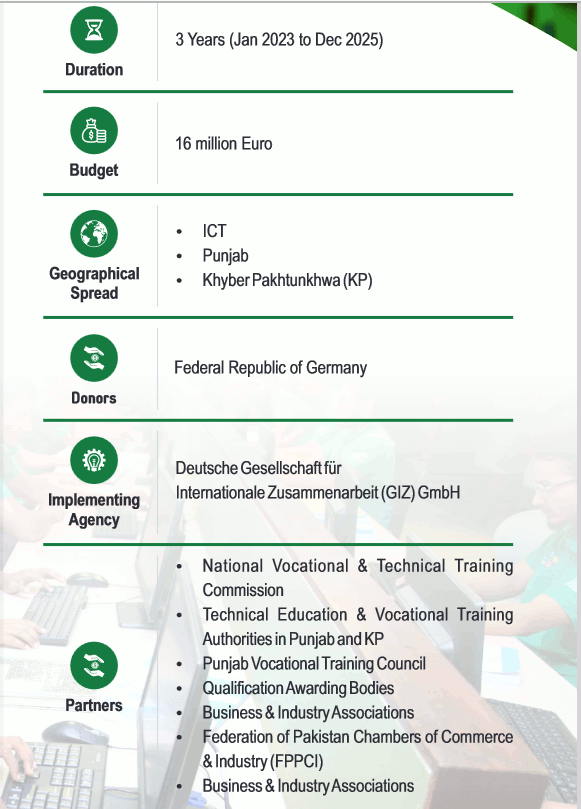
To modernize the country’s Technical and Vocational Education and Training (TVET) system. Pakistan has adopted an internationally recognized training approach called Competency-Based Training (CBT). This system replaces the traditional method of training. NAVTTC, with the support of GIZ, has trained and assessed more than 2,100 assessors in competency-based training to improve their standards. These assessors will be involved in RPL and other NAVTTC projects.
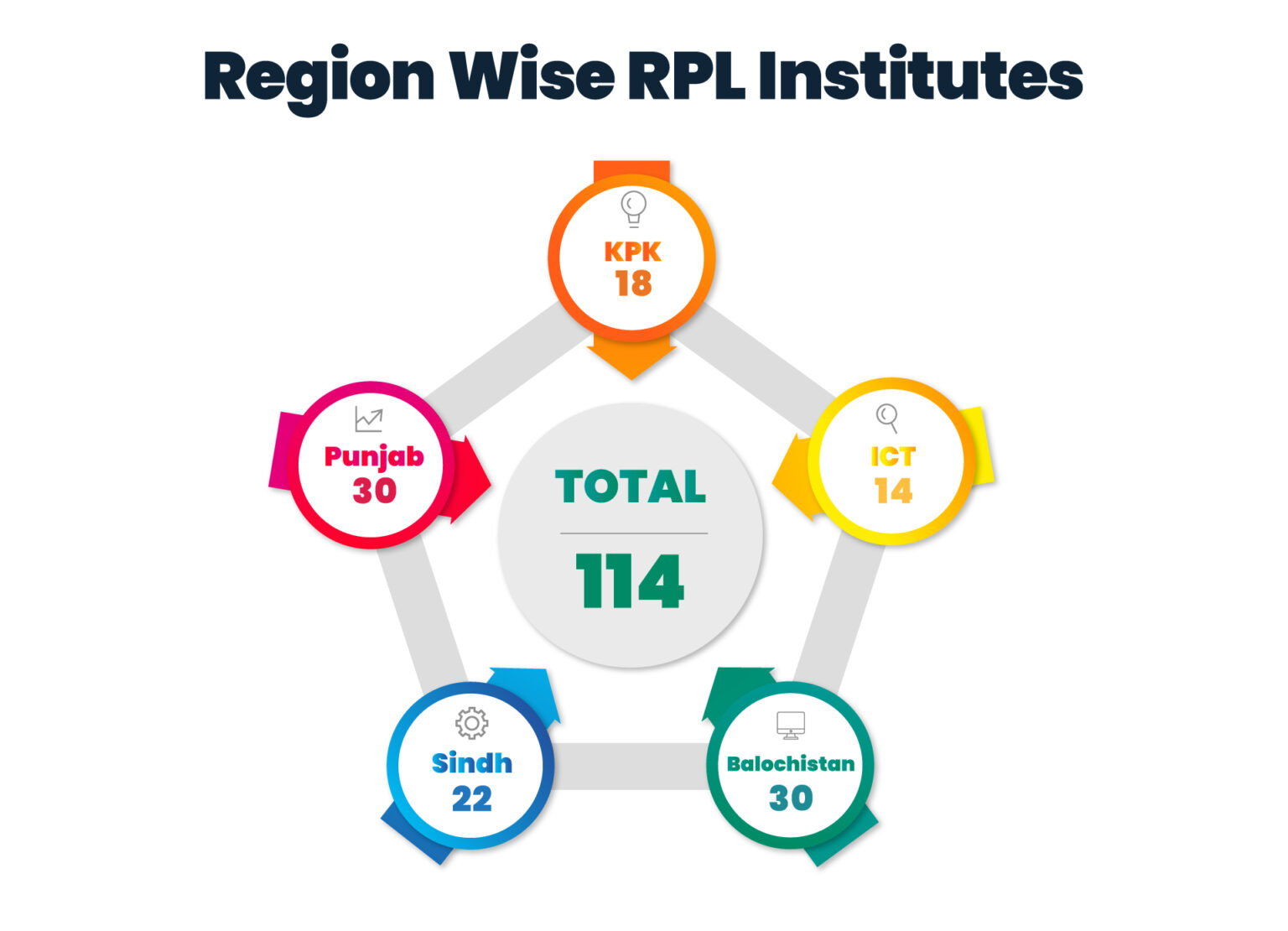
Currently, NAVTTC operates 114 assessment centers nationwide where RPL activities take place. By establishing more RPL assessment centers in the country’s public. In the private sector, NAVTTC aims to achieve higher targets in the future.
It’s widely known that Pakistani workers abroad play a significant role. In the country’s economic development, they send money back home, known as remittances. Countries such as those in the Middle East, Saudi Arabia, Malaysia, and the United Kingdom. Other European nations are major sources of remittances, second only to exports. RPL (Recognition of Prior Learning) ensures that workers sent abroad are genuinely certified, increasing foreign remittances. And enhancing the reputation of Pakistani skilled workers in the international job market.
How RPL Works
-
Application – The candidate applies to an authorized training body or institution.
-
Skill Assessment – Assessors check skills through tests, interviews, demonstrations, or portfolios.
-
Evidence Submission – Work samples, reference letters, photos, or videos may be required.
-
Certification – If the candidate meets standards, they are awarded a formal certificate equal to that of regular learners.
Who Can Apply for RPL?
-
Skilled workers without certificates.
-
Self-taught professionals.
-
People trained through on-the-job experience.
-
Community workers, artisans, or freelancers.
-
Individuals with international experience but no local recognition.
Benefits of RPL for Workers
-
Get formal recognition for existing skills.
-
Improve chances of job promotions.
-
Access higher education opportunities.
-
Gain international mobility (if certificates are globally recognized).
-
Stand out in the job market with official certification.
RPL in Different Countries
-
Australia & UK: Widely used to certify skills for vocational training.
-
South Africa: National Qualifications Framework (NQF) supports RPL.
-
India & Pakistan: Skill development councils run RPL schemes for informal sector workers.
-
European Union: Many EU countries recognize non-formal and informal learning for qualifications.
FAQs: Recognition of Prior Learning (RPL)
Q1: What is the main purpose of RPL?
To recognize and certify skills learned outside formal education.
Q2: Is RPL free of cost?
It depends on the country and training body. Some governments offer free RPL programs, while others may charge a fee.
Q3: What kind of evidence is required?
Work samples, employment records, reference letters, photos, videos, or skill demonstrations.
Q4: Can RPL help me get a job abroad?
Yes, in many cases. If your certificate is nationally or internationally recognized, it can improve job opportunities overseas.
Q5: Is RPL equal to a formal qualification?
Yes. In most cases, an RPL certificate is treated the same as one earned through formal training.